Summary
Among Helldivers, few phrases evoke such dread as ‘fire tornado.’ InHelldivers 2, these fiery whirlwinds are just one of the many challenges you will face. Each planet boasts its own distinct effects, such as fire tornadoes, icy blizzards, meteor strikes, and sandstorms. These hazards range from mildly disruptive to potentially catastrophic events that can dramatically change the course of a mission.
While some planets offer no modifiers, most of them feature at least one unique planetary effect, with some hosting two. These effects significantly alter the gameplay dynamics of each mission, injecting a nice bit of variety into the game. Navigating these planetary conditions effectively requires some quick thinking and strategic planning. Let’s “dive” deeper to uncover which planets have the most challenging environments.

12Rainstorm
“Torrential rainstorms reduce visibility.”
Let’s begin with lighter conditions, focusing on the rain. While rain slightly impairs visibility, it’s not as severe as other vision-obscuring effects. In the game, rain looks stunning, immersing you in a realistic downpour. Prepare to embrace the mud!
Your Helldiver should have no problem with this, adding to a canvas that’s already covered in bug guts and robot juices. Overall, this weather effect is visually appealing and a bit calmer compared to other hazards.

11Acid Storms
“Violent acid storms reduce visibility.”
Like rainstorms, Acid Storms diminish visibility, enveloping the map in a hazy green mist. Interestingly, despite their name suggesting harm, Acid Storms don’t directly affect your Helldiver.
In terms of visibility reduction, there is a moderate level of impairment.

It’s recommended to steer clear of engaging in combat within or near dense jungle regions during acid storms. This combination can make visibility incredibly challenging. Make sure to keep track of your teammates and remember, friendly fire is always enabled!
10Thick Fog
“Dense fog lightly reduces visibility for both enemy and friendly units.”
Dense fog creates significant visibility challenges, making it even more difficult to see. This scenario proves to be slightly more problematic than the others mentioned so far. This atmospheric condition adds a layer of suspense and strategy to the gameplay, requiring players to rely on their senses and tactical skills rather than clear sightlines.
Whether using it as cover or to set up an ambush, the fog presents a dynamic challenge that keeps players engaged and on their toes. Some mission goals also generate fog, which players can eliminate by destroying its source. However, on certain planets, the fog remains permanently active, posing a continuous challenge throughout the mission.

9Extreme Cold
“Icy temperatures reduce rate of fire and delay heat buildup in weapons.”
Burr, it’s chilly out, don’t forget to bring a laser! Laser weapons work by heating up every time they’re fired, so you effectively have infinite ammo if you never overheat your weapon. Because of this, laser weapons work naturally well on cold planets, meaning you can deal more damage before overheating.
Planets with Extreme Cold also feature extensive areas of deep snow that can significantly reduce movement speed. Be cautious and mindful of your steps, and avoid these deep snow patches whenever possible by either walking around them or using a Jetpack to traverse over them.

8Blizzards
“Intense blizzards reduce mobility and moderately reduce visibility for both enemy and friendly units.”
Blizzards are one of the harsher planetary hazards that reduce visibility, because they bring the added effect of slowing your movement speed. There are boosters that can aid in traversing difficult terrain or give you increased stamina regeneration. It’s recommended to coordinate your loadout with teammates to ensure you have the most effective tools available.
Similar to Fog and Rian, Blizzards cause significant visual impairment, so it’s crucial to stay aware of your teammates' locations to avoid friendly fire.

7Tremors
“Frequent earthquakes stuns players and enemies alike.”
Usually found on rocky planets, Tremors cause earthquakes to hit periodically, briefly stunning both enemies and players alike. Unfortunately, there are no giant sand worms associated with this event… yet.
This one is pretty much straight forward, just try not to be caught out in the open when the rumbling starts. You could bring a Jetpack to help get moving quickly again after being stunned.
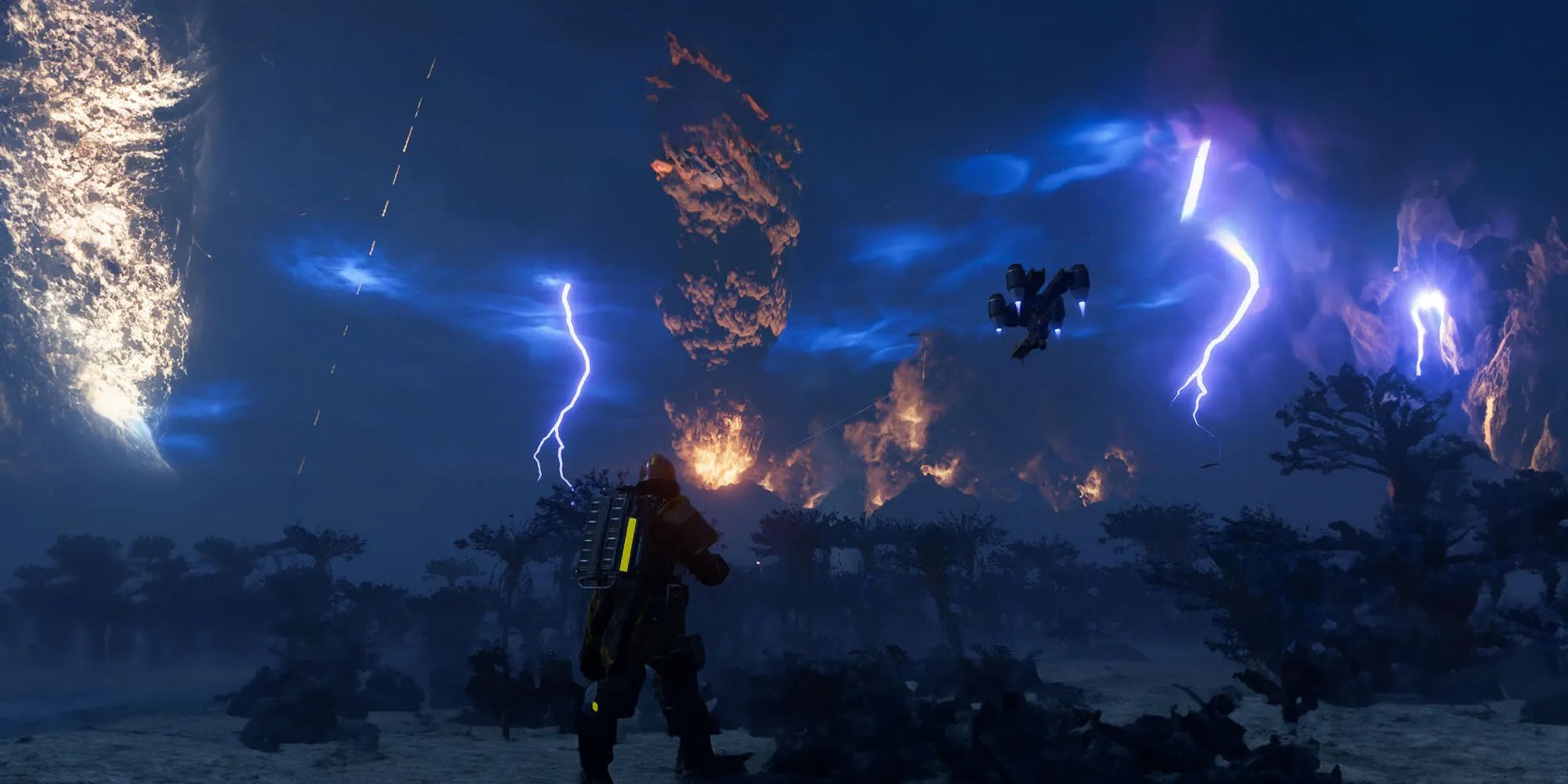
6Ion Storms
“Ion storms intermittently disable stratagems.”
This one can cause massive problems if you’re unaware it’s coming. Helldivers get a lot of their firepower from their flagship in the form of stratagems. When an Ion Storm is active, all your stratagems are completely disabled for the time being.
Hopefully, you have already called in your support weapons and backpacks because you’re essentially a sitting duck when you’re offline from your stratagems. It’s advised not to enter any big engagements if you notice an Ion Storm is imminent.

5Meteor Storms
“Meteor storms impact the surface causing massive damage.”
Just imagine giant fiery rocks falling from the sky. I hope you brought a hard hat. This one can straight out kill you if your caught in its impact radius.
It does give you a warning of where a meteor will strike, but with all the chaos going on, it can be easy to miss that warning. There will be a circular ring of light on the ground just before impact, so if you happen to see yourself in the radius, dive!
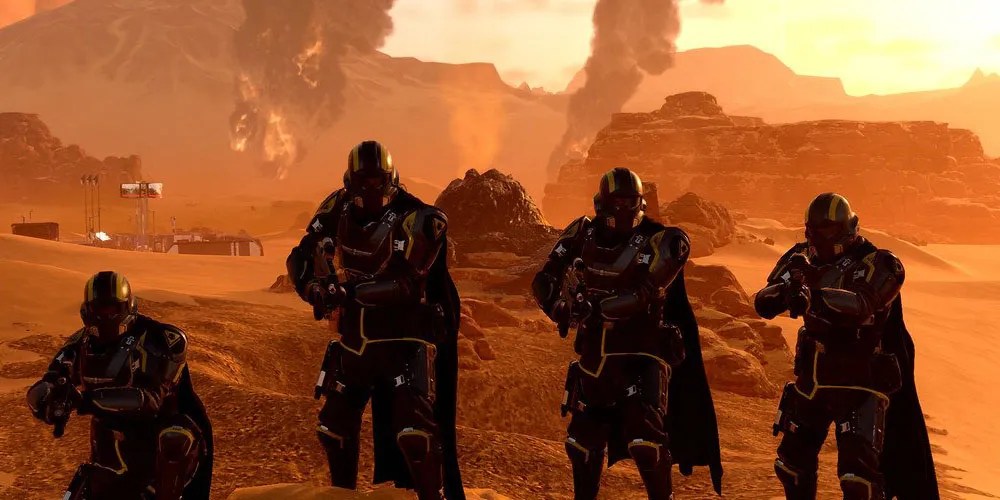
4Volcanic Activity
“Volcanoes throw burning rocks around this planet.”
Like meteor storms, watch out for the skies if you don’t want to get crunched by a giant lava rock! Lots of giant rocks trying to kill you in this game.
A volcano is present somewhere on the map in these missions and will erupt periodically. The impact it creates is deadly, but it also leaves behind a trail of fire where it lands. Be extra careful of your surroundings when near a volcano, I feel like that’s just good general advice.

3Intense Heat
“High temperatures increase stamina drain and speedup heat buildup in weapons.”
Suns out, guns out! Not necessarily lethal on its own, intense heat causes problems in other ways. Mainly stamina, as intense heat causes your Helldiver to expand your stamina at a faster rate, meaning you can’t sprint for as long as you normally can.
Intense heat also has an adverse effect on energy weapons, causing them to heat up faster, essentially shrinking their magazine size. This planetary effect forces the player to think a little bit more strategically on their feet. A great counter to this effect is to bring the support perk that increases stamina recovery.
